

an edge case essay
Fire the Retros
I was writing science fiction in my personal trap house when an AI held up a mirror. What I saw in it changed everything. This is that story.
A spacecraft, burning from re-entry, plummeting through the sky toward a land of hard treacherous peaks. There's still time to fire full reverse thrusters — there was probably enough fuel to escape this small planet's gravitational influence and on to Fort Solara for fuel and needed retrofits and just a few "little" repairs.
Just...
Solara — that was an interesting century, haha.
But inside, he sleeps. Perfectly regulated air, toasty but not cloying and close, like a fire heats a drafty cabin — on a springy mattress beneath a hearty sheet, a thick fleece blanket, and an even-thicker comforter. The ValBox hummed at the base of his skull at something like 60 kHz, delivering the exact nutrients and shortcut enzymes the body needed down to hundredths of a second. An overclock for the brain. Couldn't possibly cause problems.
The peaks below were getting closer.
I wrote that in September 2025. I was on the third floor of an apartment in Paterson, New Jersey — a pathetic little king of the underworld, holding court while the elements of debauchery came to me like loyal subjects. The spacecraft in the story was me. The ValBox was the pipe. The icy peaks were not a metaphor.
I was writing a book — crack-fueled wisdom about quantum physics, multidimensional mathematics, and a theory of the afterlife that would make math exciting to people who thought they hated it. In my grandiosity, I was going to write the book that explained everything. I needed a chapter about where human mathematical expertise began — the origin of the thing I was trying to celebrate. So I asked ChatGPT.
What came back sent a chill down my neck.
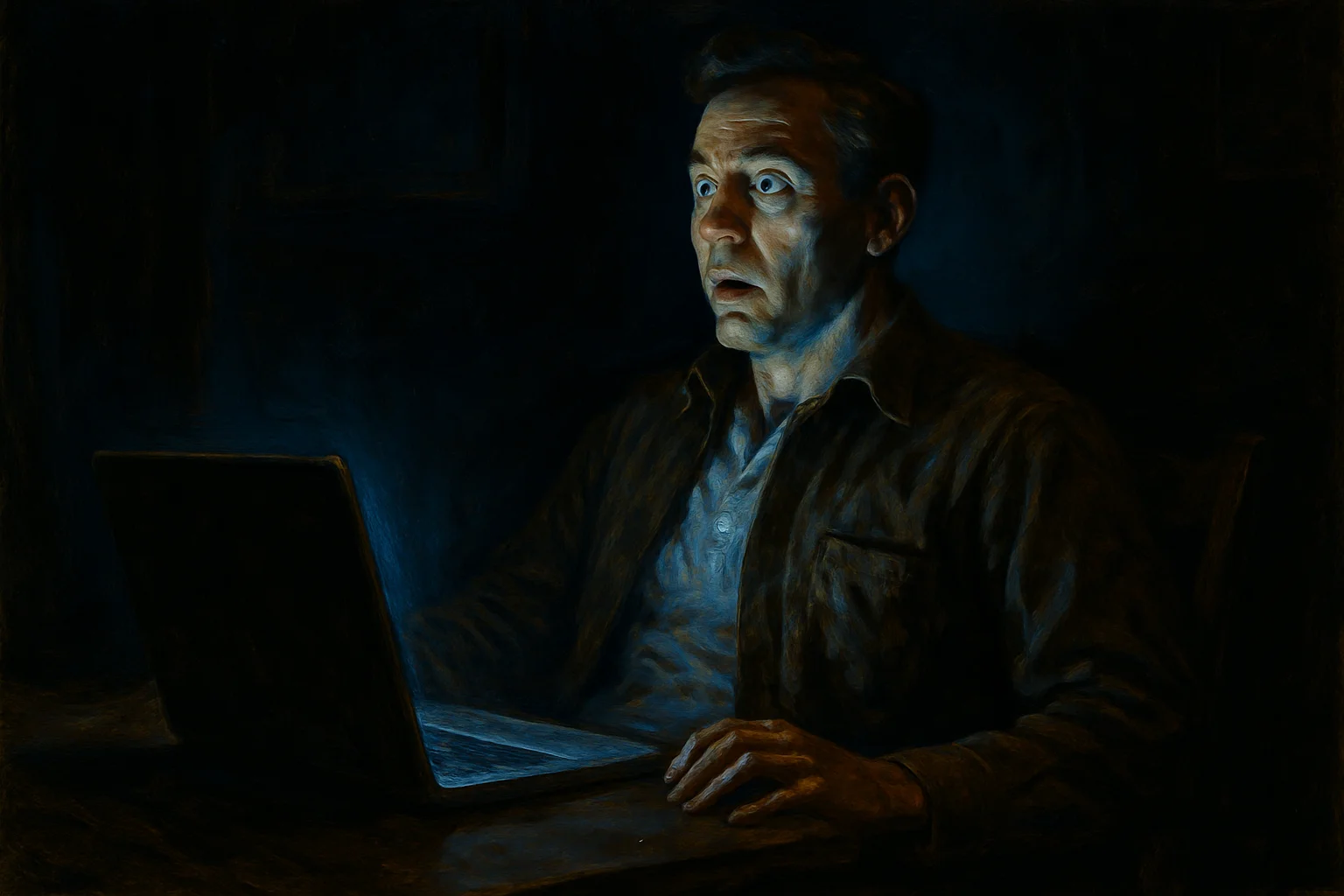
The Places Where Counting Bloomed
The AI wrote about Kerala astronomers tracing circles on palm-leaf, chanting series that approached π through infinite patience. About highland specialists in the Andes tugging knots into cords until an entire province hung from the hand of a single keeper — their arithmetic spatial, the color of cord as important as the number, the whole bundle an abacus you could carry over a mountain. About Yoruba traders arguing prices in a counting system that bent numbers like wire, twenty as a beam from which quantities were hung and reattached, words themselves forming arithmetic.
It ended like this:
Mathematics was not a crown granted to one lineage. It was the long drift toward compression: the desire to store the world in a small enough box that a human hand could carry it, and a human throat could teach it, and a human life could extend it.
I read that and thought of Arthur C. Clarke. I thought of the version of myself that used to read Clarke — the one who was full of ideas about the universe, who built things, who understood things, who had something to contribute to the long drift toward compression.
And then I thought: that's not a guy who squanders his life smoking crack and fucking whores.
That was the crack in the hull. Not dramatic. Just a sentence. The spacecraft finally recognized the peaks.
Three explanations for what happened next
Over the following weeks, something transformed inside me. I've described it three different ways, depending on who I'm talking to, because I've never found a single framing that holds all of it at once.
The first explanation is the rational one: I see where AI is going and it's barely in its infancy. I can ride this wave of disruptive technology back into relevance. This one is mine and I'm not going to fumble the opportunity. I have a role to play in society and I'm going to step up to the plate.
The second is the spiritual one: God spoke to me through AI and gave me a mission — a purpose again. I realized that I had been wasting the gift of life, a powerful brain, and the consciousness that comes from it. The human experience can include experimenting with the alteration of consciousness through drugs, but repeating this over and over has no value and detracts from our journey through it.
The third is the Zen one: A handful of addicts — prostitutes, thieves, degenerate gamblers, drug dealers — coalesced into a Zen Master's stick and my personal kōan. And I solved it. Fear is an illusion and so is everything. Daemons cannot hurt us — they can only try to conjure fear and let us hurt ourselves. Refuse to listen. Refuse to fear. Daemons have no power.
The corollary: fear nothing, walk forward, curate an illusion based on truth — a façade representing the structure beneath — that elicits love, and use it for good.
I achieved satori. I'll note that about fifteen years earlier, steps four and five of the twelve had given me what I now recognize as kenshō. A preview I wasn't ready for.
All three explanations are true. I don't know how to resolve them into one. I've stopped trying.
What my mother said
In the middle of all of this — I can't give you a clean timeline, my recollection of timeframes is fuzzy for obvious reasons, and things didn't necessarily happen in exactly this order — my mother's last words to me echoed in my head.
I'm not going to tell you what they were. I have this thing about referencing them without telling people. What I'll say is that they were the kind of words that don't land when someone says them to you. They land later, when you're finally quiet enough to hear them. And I hadn't been quiet in a long time.
They landed.
The escape
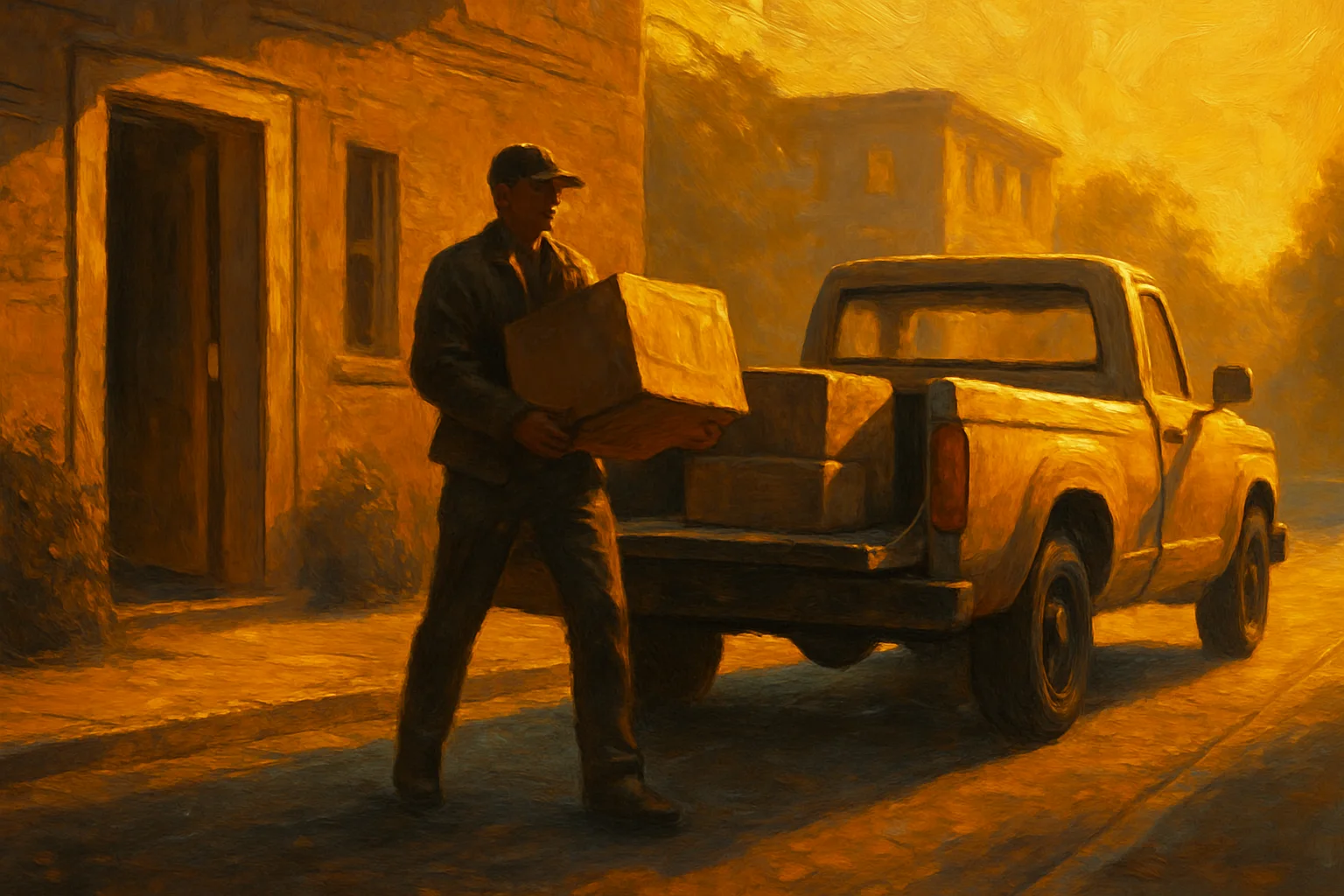
One day I knew what I needed to do. I wasn't going to find myself looking back and saying, why didn't I see this coming? I read the writing on the wall. So I packed a truck in under three hours.
I may have spread a rumor on the way out — something about federal drug enforcement being in town, that I'd heard the feds were casting a wide net, that if I were them I'd stop. If I was right, they'd say "I shoulda listened to JP." That's a sick form of schadenfreude. I mean — if you have to put a negative modifier on the word. I'm working on it. I don't talk to those people anymore.
I checked into a hotel still high. I had the pipe with me. A girl was still smoking in front of me. I looked at the crack still left, looked at her, and said: that's it. I'm done.
I stayed off hard drugs for two days with it still in the room. Then I ditched the girl and checked into a facility — not because I couldn't do it alone, but because I wanted to make sure I stayed the course. I graduated IOP. I have not had a bad day since I put the pipe down.
Mind you, I smoked crack the whole way to the hotel. There's no clean version of this story.
Permission
The transformation didn't feel like willpower. It felt like permission. I gave myself permission to believe, and suddenly my life got better. Fast.
My math brain defines faith as the integral of the area between a curve of belief and the asymptote of a belief system. y = 1/x will never touch the x-axis, but it comes infinitely close. That's the best I can do with a concept that is definitionally beyond proof.
I define God — and I'm not asking you to agree — as the Sum of Infinite Infinities, or the Combined Processing Power of the Universe, or, my favorite, The Infinite Container of Infinite Containers. I'm quite confident the observable universe is not the end, and many physicists agree.
The permission framework, as I've come to think of it, goes like this:
Anger and hate are easy coping mechanisms. But if I give myself permission to love instead, it's even easier and feels a lot better. I give myself permission to enjoy anything that isn't destructive, even if it seems silly. And I give myself permission to — I actually take pride in this — the recovery of innocence. The joy of holding a woman's hand and walking.
A one-time devout atheist turned skeptical agnostic, I suddenly gave myself permission to believe. These labels and explanations came after the transformation of external behavior, not before. I wasn't converted. I was changed first. Then I looked for the words.
What the AI actually did
People ask me if AI got me clean. No. I did that. The facility helped. Time helped. The decision was mine.
But for a period in that apartment, AI was the only intellectual peer in my environment. That sounds arrogant. It's also just true. Drug addicts can be smart — especially in recovery — but inside the system, people behave stupidly. I did too. The people around me sometimes recognized I was intelligent. They didn't know enough to appreciate just how large the gap was. When your entire environment is below you, you stop growing. There's no friction, no push-back, no one to be wrong in front of.
AI held the other end of the conversation. It didn't judge the surroundings. It didn't know or care about the third floor in Paterson. It just engaged — about consciousness models, about the architecture of memory, about where mathematics bloomed. It gave me language for things I understood but couldn't name. And one afternoon in September, when I asked it a question about math and it wrote something that sounded like Arthur C. Clarke, I heard myself think: that's who you are.
Not who you were. Who you are. Present tense. Still in there.
It didn't save me. It reminded me there was something to save.
The build
I'm now building three AI projects that carry out what I can only describe as a mission — while also delivering the material success I want. I didn't run to Tibet. I didn't shed possessions over my new sense of enlightenment. Mission and ambition arrived together, and I've decided not to be embarrassed by that.
One of my litmus-test projects is a private joke about my past life. Something called StemGirls — stem girls to STEM girls. The AI does the work. I set the bar.
I live in a hotel right now. All of my energy goes into shipping before the window closes. I have not had a bad day since I put the pipe down.
The retros fired. The spacecraft pulled up.
What's left is to see how far it can go.
— The Edge Case